Responding vs. Reacting:

Food as Medicine
March 11, 2026
Emotional Detox:
March 11, 2026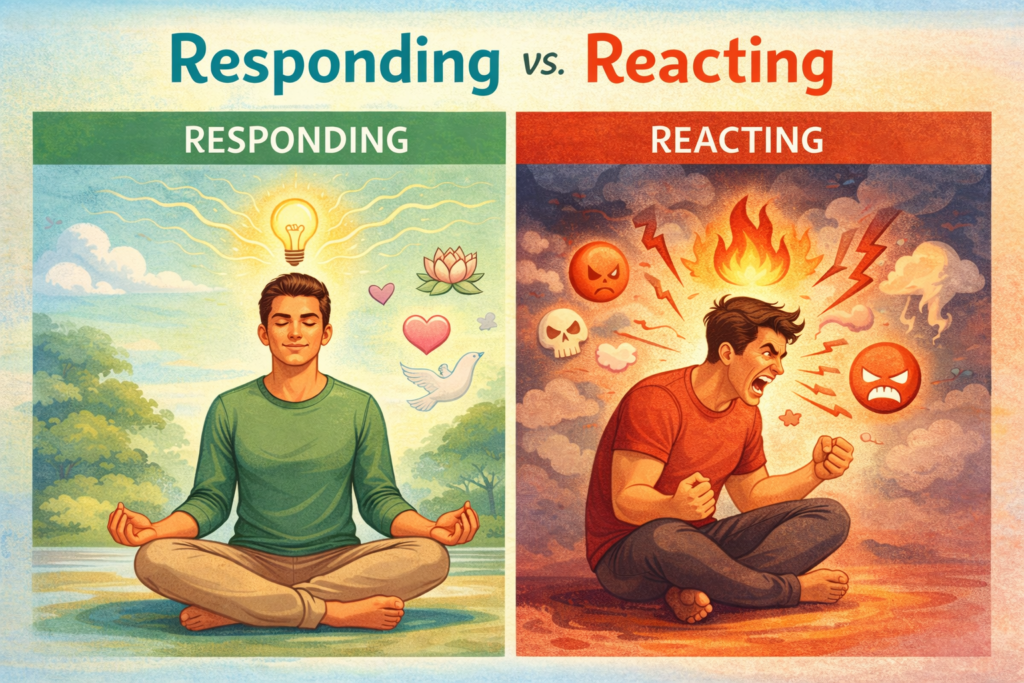
The Art of Emotional Regulation
In everyday life, we often use the words respond and react interchangeably. But emotionally, they are very different experiences—and understanding this difference can change the way we handle stress, relationships, and challenges.
Most of us don’t choose to react.
We react because we feel overwhelmed.
Emotional regulation is the ability to pause, understand, and choose how we respond instead of being driven by impulse.
What Does Reacting Look Like?
Reacting happens instantly. It is driven by emotion, not awareness.
It may look like:
- Raising your voice before thinking
- Saying something you later regret
- Shutting down emotionally
- Feeling consumed by anger or anxiety
Reactions are automatic and often rooted in stress, fatigue, or unresolved emotions.
What Does Responding Mean?
Responding involves a pause—however brief. It is a conscious choice, even in difficult moments.
A response allows you to:
- Acknowledge your feelings
- Understand the situation
- Choose words or actions thoughtfully
Responding does not mean suppressing emotions. It means managing them with awareness.

Why Emotional Regulation Matters
Emotional regulation is not about controlling emotions—it is about understanding them.
When we regulate emotions:
- Relationships improve
- Stress feels more manageable
- Communication becomes clearer
- Self-respect grows
Unregulated emotions, on the other hand, often lead to conflict, guilt, and emotional exhaustion.
The Pause: A Powerful Tool
One of the simplest tools for emotional regulation is the pause.
Even a few seconds can help:
- Take a deep breath
- Relax the body slightly
- Shift from reaction to response
This pause gives the mind space to catch up with the emotion.
Naming the Emotion
Emotions become more manageable when they are named.
Instead of saying, “I’m fine,” try recognising:
- “I’m feeling frustrated.”
- “I’m feeling overwhelmed.”
- “I’m feeling anxious.”
Naming emotions reduces their intensity and increases self-awareness.
Practising Emotional Regulation Daily
Emotional regulation is a skill built through practice, not perfection.
Simple daily practices include:
- Noticing physical sensations during stress
- Slowing down your breath
- Reflecting before responding
- Giving yourself permission to step away briefly
Over time, these small practices create emotional stability.

A Gentle Reminder
We all react sometimes. Emotional regulation is not about eliminating reactions—it is about reducing their frequency and intensity.
At IDEACONS, we believe that when individuals learn to respond rather than react, emotional health becomes stronger and more sustainable.
Because awareness creates choice,
and choice creates balance.