Breaking the Silence:Normalising Conversations Around Mental Health

Emotional Detox:
March 11, 2026
Mental Health Is Not a Crisis Issue:
March 11, 2026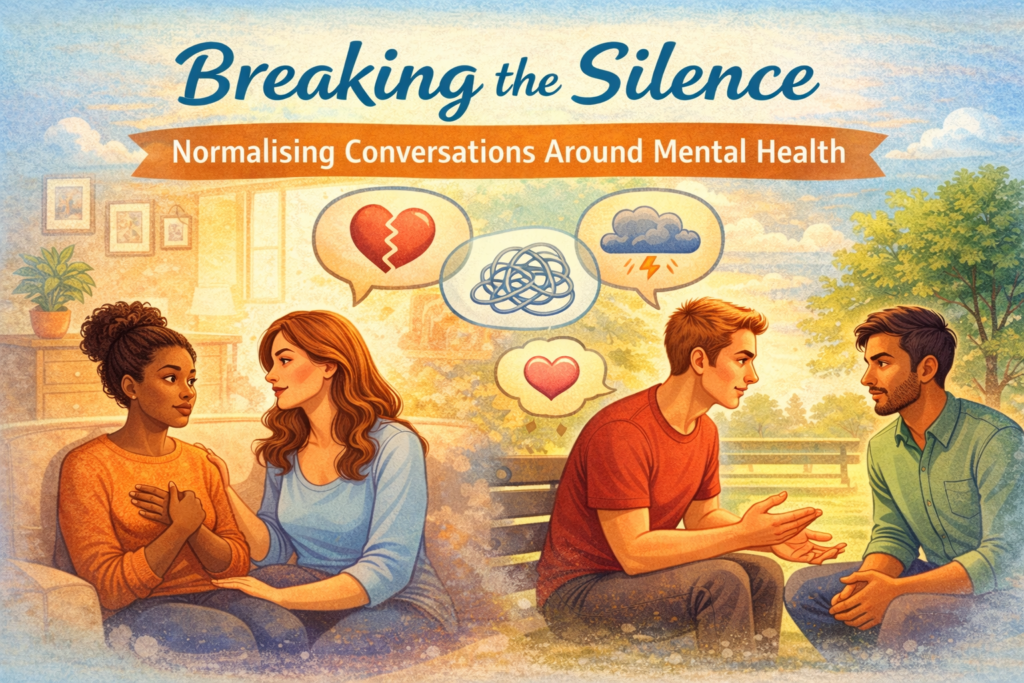
For a long time, mental health has been spoken about in hushed tones—or not spoken about at all. Many people continue to struggle quietly, unsure of how to express what they are feeling or fearful of being misunderstood.
Silence does not protect us.
Silence isolates us.
Breaking the silence around mental health is not about dramatic disclosures or medical terminology. It is about creating safe spaces for honest conversations.
Why Mental Health Is Still Difficult to Talk About
Despite growing awareness, mental health remains surrounded by stigma. People often hesitate to speak because they fear:
- Being judged or labelled
- Appearing weak or incapable
- Burdening others
- Not being taken seriously
As a result, emotional distress is often hidden behind routine smiles and daily responsibilities.
Mental Health Is Part of Everyday Life
Mental health is not limited to extreme conditions or diagnoses. It is present in everyday experiences—stress, anxiety, emotional exhaustion, loneliness, and self-doubt.
Just as physical health fluctuates, mental health does too.
Normalising mental health conversations means acknowledging that emotional struggles are human experiences, not personal failures.
The Cost of Silence
When conversations around mental health are avoided, people often internalise their struggles. Over time, this can lead to:
- Increased stress and burnout
- Emotional isolation
- Difficulty seeking help
- Strained relationships
Silence delays support and deepens distress.
Talking, on the other hand, lightens emotional weight—even when solutions are not immediate.

Creating Safe Conversations
Normalising mental health begins with how we listen.
Safe conversations require:
- Non-judgemental listening
- Patience and presence
- Avoiding quick advice or comparisons
- Respecting individual experiences
Sometimes, simply being heard is more healing than being helped.
The Role of Families, Schools, and Communities
Mental health conversations should not be limited to clinical spaces. Homes, schools, and workplaces play a crucial role in shaping emotional openness.
When adults model emotional honesty, children learn that it is safe to express feelings. When educators acknowledge stress, students feel less alone. When leaders speak openly, others feel permitted to do the same.
Awareness spreads through example.
Seeking Support Is Strength
Asking for support is often misunderstood as weakness. In reality, it reflects courage and self-awareness.
Support may come through:
- Trusted conversations
- Professional guidance
- Peer support
- Reflective practices
There is no single right way to seek help—only the willingness to begin.

Moving Towards a Culture of Understanding
Normalising mental health conversations does not mean every problem needs immediate answers. It means creating an environment where people feel safe to speak, reflect, and seek support without fear.
At IDEACONS, we believe mental health matters much—not just during crises, but every day.
Because when silence is replaced with understanding,
healing becomes possible.